
Raw Feeding Puppies: A Complete Guide

Puppy Raw Feeding Guide
Everything You Need to Know About Raw Feeding Your Puppy
Raw feeding puppies doesn’t need to feel complicated. This practical guide explains when puppies can start a raw diet, what to feed during growth, how much raw food to offer, how often to feed, and how to make the switch. You’ll also find clear guidance on balanced nutrition, calcium and phosphorus, large-breed puppies, raw bones, food hygiene and choosing suitable puppy raw food.
The Short Answer
Can Puppies Eat Raw Food?
Yes, puppies can eat raw food from weaning, provided it is a complete and balanced diet. Puppies have different nutritional requirements from adult dogs, so their meals must provide essential nutrients as they develop.
Complete puppy raw food is the simplest option for most owners, while complementary foods, treats and chews should not replace complete meals. Good hygiene and safe handling are also important whenever raw pet food is prepared.
If your puppy has a medical condition or you have concerns about their growth, speak to your vet before changing their diet.
Getting Started
When Can Puppies Start Eating Raw Food?
Puppies can begin eating suitable raw food during weaning, when they start moving from their mother’s milk onto solid food—usually from around three to four weeks old. At this stage, our Puppy Weaning Paste provides a soft, easy-to-eat and finely minced introduction to raw feeding.
By around eight weeks, most puppies are fully weaned and can eat complete raw puppy food as their main diet. Choose food that is formulated to support growth, while also considering what your puppy is already eating, their age and how well they tolerate dietary changes. Our Paleo Puppy range has been specifically developed to meet the nutritional needs of puppies.
Choose Your Puppy's Starting Point
Weaning
Puppies can begin exploring solid food from around three to four weeks old, alongside their mother’s milk. Start with a soft, finely minced food that is easy for young puppies to lap and digest. Our Puppy Weaning Paste is designed for this early stage. As weaning progresses, gradually increase the amount of solid food until the puppies are eating independently.
Eight Weeks Old
By around eight weeks, most puppies are fully weaned and eating solid food independently. They can now be fed Complete Raw Puppy Food divided into several small meals throughout the day. Choose a diet formulated to support growth and follow the product’s feeding guidance as a starting point, adjusting it as your puppy develops.
Already Raw-Fed
If your puppy is already eating raw food with their breeder, ask exactly which recipes, quantities and meal schedule they are used to. Continue the familiar routine initially while your puppy settles into their new home. You can then introduce our Paleo Puppy recipes gradually, monitoring appetite, stools, weight and body condition as you make changes.
Switching Diets
If your puppy currently eats dry or wet food, continue their familiar diet initially rather than changing everything as soon as they arrive home. Once they have settled, introduce Complete Raw Puppy Food gradually using our step-by-step Switch to Raw Guide. Seek veterinary advice if your puppy develops persistent vomiting or diarrhoea, refuses food or appears unwell.
Puppies can begin exploring solid food from around three to four weeks old, alongside their mother’s milk. Start with a soft, finely minced food that is easy for young puppies to lap and digest. Our Puppy Weaning Paste is designed for this early stage. As weaning progresses, gradually increase the amount of solid food until the puppies are eating independently.
By around eight weeks, most puppies are fully weaned and eating solid food independently. They can now be fed Complete Raw Puppy Food divided into several small meals throughout the day. Choose a diet formulated to support growth and follow the product’s feeding guidance as a starting point, adjusting it as your puppy develops.
If your puppy is already eating raw food with their breeder, ask exactly which recipes, quantities and meal schedule they are used to. Continue the familiar routine initially while your puppy settles into their new home. You can then introduce our Paleo Puppy recipes gradually, monitoring appetite, stools, weight and body condition as you make changes.
If your puppy currently eats dry or wet food, continue their familiar diet initially rather than changing everything as soon as they arrive home. Once they have settled, introduce Complete Raw Puppy Food gradually using our step-by-step Switch to Raw Guide. Seek veterinary advice if your puppy develops persistent vomiting or diarrhoea, refuses food or appears unwell.
Balanced Nutrition for Growth
What Should a Raw-Fed Puppy Eat?
A raw-fed puppy should eat a complete and balanced raw diet formulated to support growth. Puppies need energy, protein, fat, vitamins and minerals in the correct amounts and proportions as their bones, muscles and organs develop.
For most owners, Complete Raw Puppy Food is the simplest foundation because it is designed to provide the essential nutrients a growing puppy needs.
Complementary meals, raw bones, treats and other extras can add variety and enrichment, but they should not replace complete meals or unbalance the overall diet for puppies.
Our Paleo Puppy Range has been developed specifically to support young dogs during this important stage of growth and development.
Choose the Right Food for Your Puppy
Complete Puppy Meals
Complete puppy food is designed to provide all the nutrients your puppy needs each day. Look for raw food that is clearly labelled as complete and suitable for puppies or growth, rather than assuming that every complete adult recipe will meet a growing puppy’s requirements.
Complementary Raw Food
Complementary raw food does not provide every nutrient required as a complete daily diet by itself. It may be used alongside other appropriately balanced foods, but owners need to understand how the overall diet is being completed. For most new raw feeders, complete puppy meals provide a simpler and more reliable starting point.
Raw Bones, Treats and Extras
Raw bones, natural treats and nutritious extras can provide chewing, training and enrichment, but they should remain a small part of the overall diet. Too many extras can reduce the amount of complete food your puppy eats and alter the nutritional balance of their meals.
Homemade Raw Diets
Preparing a puppy’s diet from individual ingredients requires careful formulation. Growing puppies have specific nutritional requirements, including the correct balance of minerals such as calcium and phosphorus. Homemade diets should therefore be properly formulated rather than based on guesswork or a simple meat, bone and offal ratio. We recommend doing extensive research before considering formulating your own puppy food.
Complete puppy food is designed to provide all the nutrients your puppy needs each day. Look for raw food that is clearly labelled as complete and suitable for puppies or growth, rather than assuming that every complete adult recipe will meet a growing puppy’s requirements.
Complementary raw food does not provide every nutrient required as a complete daily diet by itself. It may be used alongside other appropriately balanced foods, but owners need to understand how the overall diet is being completed. For most new raw feeders, complete puppy meals provide a simpler and more reliable starting point.
Raw bones, natural treats and nutritious extras can provide chewing, training and enrichment, but they should remain a small part of the overall diet. Too many extras can reduce the amount of complete food your puppy eats and alter the nutritional balance of their meals.
Preparing a puppy’s diet from individual ingredients requires careful formulation. Growing puppies have specific nutritional requirements, including the correct balance of minerals such as calcium and phosphorus. Homemade diets should therefore be properly formulated rather than based on guesswork or a simple meat, bone and offal ratio. We recommend doing extensive research before considering formulating your own puppy food.
Daily Feeding Amounts
How Much Raw Food Should I Feed My Puppy?
As a starting guide, we recommend puppies are fed around 5–6% of their current body weight per day, divided between several smaller meals. However, the right amount will vary depending on your puppy’s age, breed, expected adult size, activity level, growth rate and the energy content of their food.
Weigh your puppy regularly and monitor their body condition rather than relying on this percentage alone. During growth spurts, your puppy may temporarily need more food, while feeding too much over time can lead to excessive weight gain—particularly in large and giant breeds.
Adjust portions gradually as your puppy grows and always follow our feeding guidance on pack.
Example: A 10kg puppy fed at 5-6% of current body weight would start at approximately 500-600g per day, divided between their daily meals.
Puppy Meal Frequency
How Often Should I Feed My Puppy?
Puppies should eat several smaller meals throughout the day because they have small stomachs and high nutritional needs during growth. Divide your puppy’s total daily food allowance between their meals rather than giving the full daily amount at each feeding.
As your puppy grows, you can gradually reduce the number of meals while continuing to monitor their appetite, weight and body condition. Avoid strenuous exercise immediately before or after meals.
Typical Feeding Schedule
Puppy Meal Frequency
Divide your puppy’s total daily food allowance evenly between the recommended number of meals.
4 meals per day
3 meals per day
2 meals per day
These are general guidelines. Your puppy’s ideal feeding routine may vary depending on their breed, size, health and development. Introduce changes gradually and continue monitoring their appetite, weight and body condition.

Making the Change
How to Switch Your Puppy to Raw Food
If your puppy is already eating raw food, continue with the food and routine they are familiar with while they settle into their new home. You can then begin introducing Paleo Puppy recipes, monitoring their appetite, stools and body condition as you make changes.
If your puppy currently eats dry or wet food, choose a complete raw puppy food and calculate their daily feeding amount before starting. Some puppies adapt well to a direct switch, while others benefit from introducing their new food gradually over several days. Avoid changing several things at once and give your puppy time to adjust. Our Switch to Raw Guide explains both approaches.
Temporary changes in stool are common during a dietary transition, but contact your vet if your puppy has persistent vomiting or diarrhoea, refuses food, appears lethargic or seems unwell.
Supporting Healthy Development
Calcium, Phosphorus and Healthy Puppy Growth
Calcium and phosphorus are essential for the development of your puppy’s bones and teeth, but more is not always better.
Growing puppies need these minerals in the correct amounts and balance, alongside appropriate levels of energy, protein, fats, vitamins and other nutrients.
Feeding too many calories or adding unnecessary calcium can encourage overly rapid growth and place additional strain on a developing skeleton. This is particularly important for large and giant-breed puppies, which should grow steadily while maintaining a lean, healthy body condition.
If you feed a complete raw puppy food formulated for growth, it should already provide the required mineral balance when fed as directed. Avoid adding calcium powders, bone meal or other mineral supplements unless advised by your vet or a suitably qualified nutrition professional.
Complete Raw Food for Puppies
Explore the Paleo Puppy Range
Our Paleo Puppy range has been developed to make raw feeding simple during your puppy’s growth and development. Each complete recipe provides balanced nutrition for growing puppies and can be fed as their main diet.
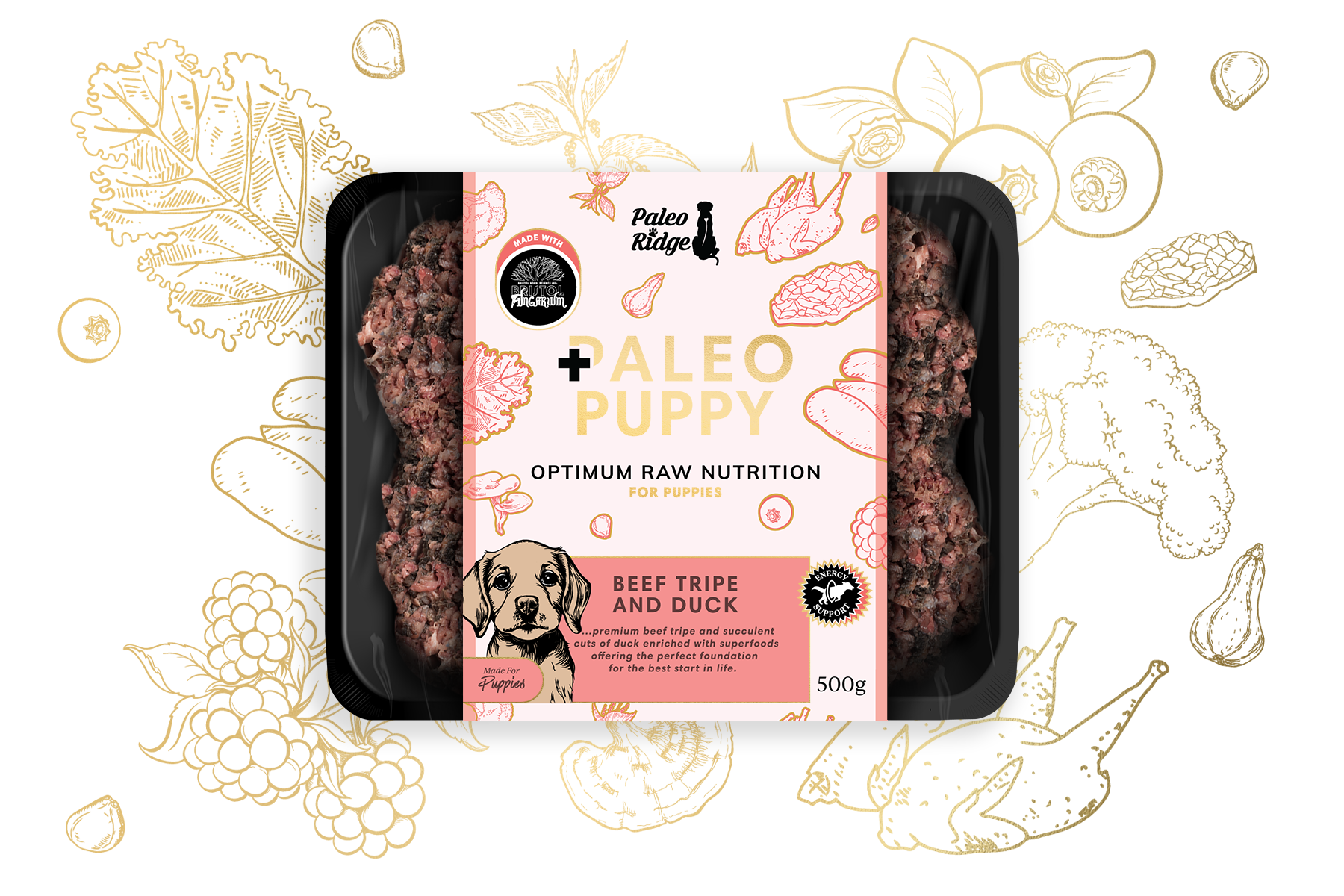
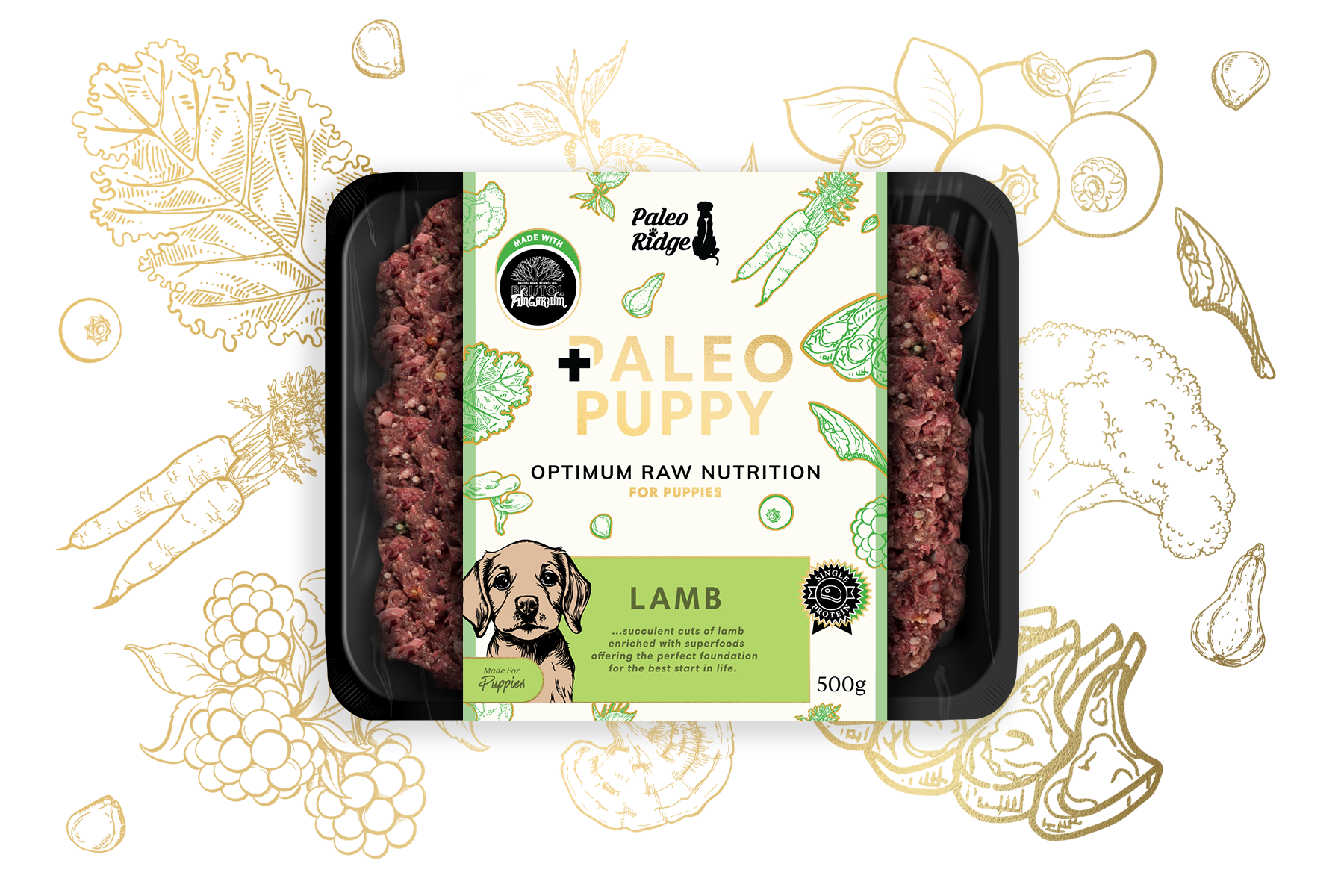
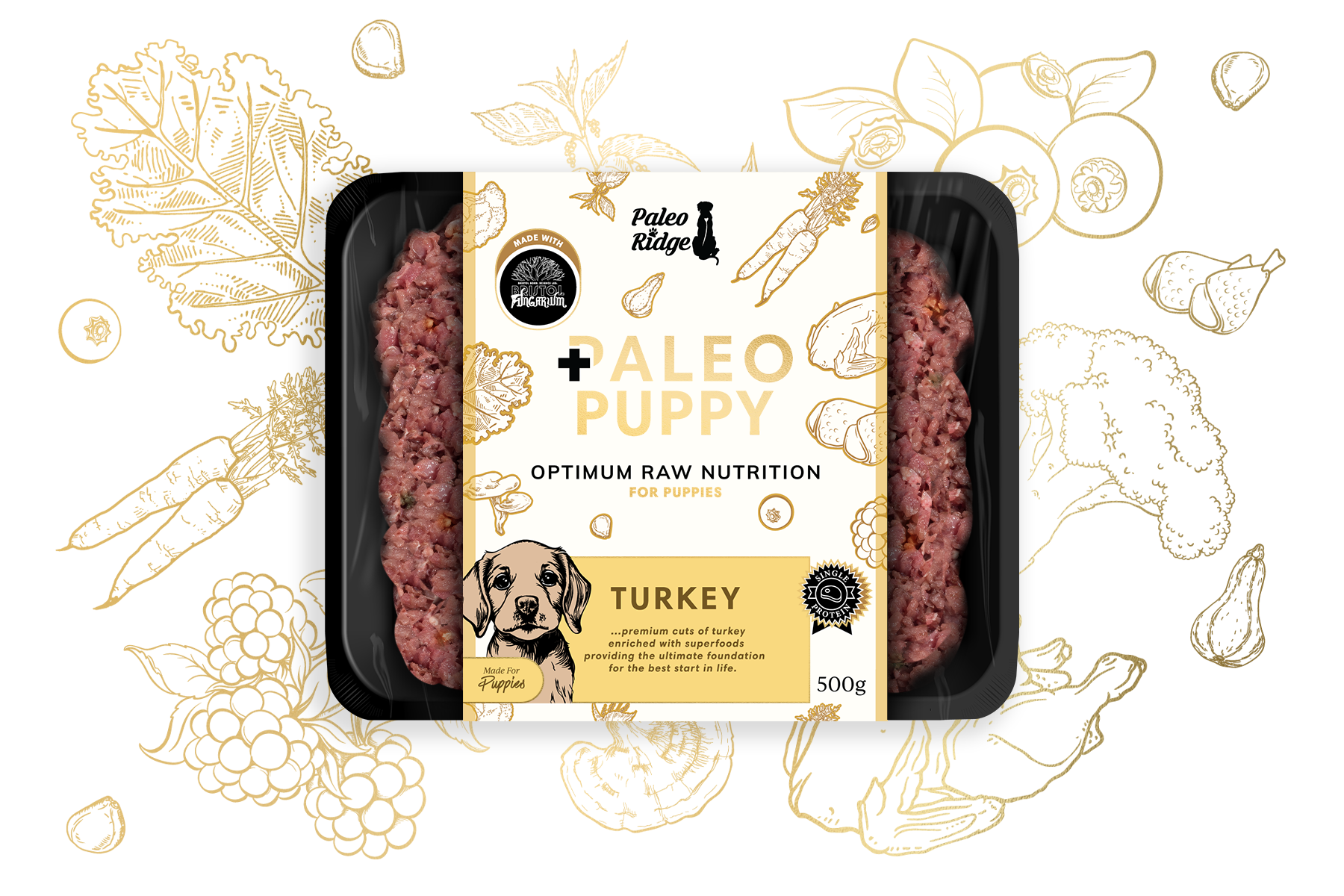
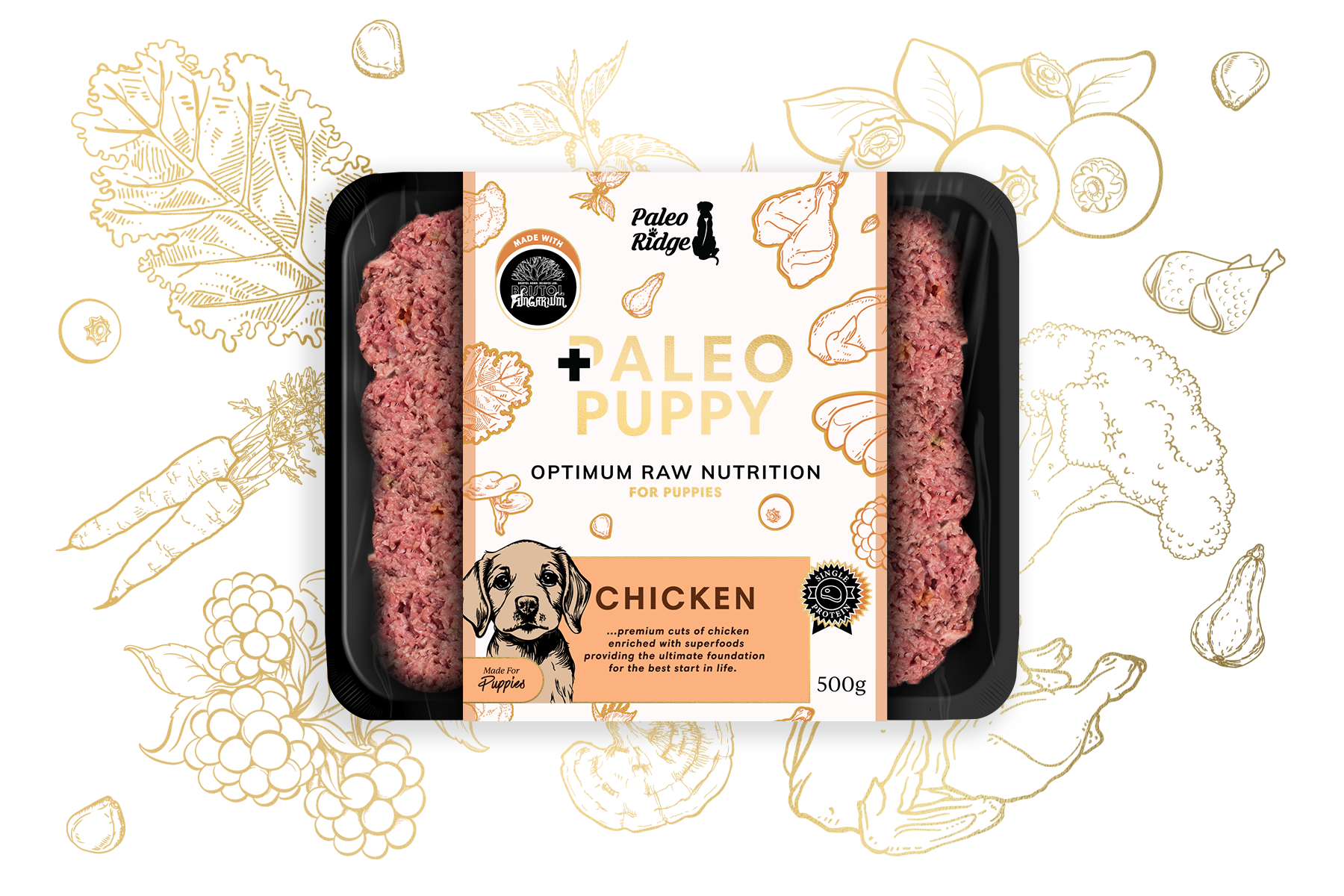
Not sure which recipe to choose? Start with one complete puppy meal and introduce additional proteins gradually once your puppy is settled and feeding well.
Quick Answers
Puppy Raw Feeding FAQs
Find answers to some of the most common questions about raw feeding puppies, including feeding amounts, meal frequency, nutrition, switching diets and food safety.
Can an eight-week-old puppy eat raw food?
Yes. By around eight weeks, most puppies are fully weaned and able to eat solid food independently. Choose a complete raw food that is suitable for puppies or growth, and initially consider continuing the feeding routine they followed with their breeder while they settle into their new home
How much raw food should I feed my puppy?
As a starting guide, we recommend feeding puppies around 5–6% of their current body weight per day, divided between several smaller meals. The right amount varies according to age, breed, activity, expected adult size and body condition, so weigh your puppy regularly and adjust their portions as they grow. Use our Raw Feeding Calculator for a personalised starting amount.
How many times a day should a raw-fed puppy eat?
Puppies generally need several smaller meals each day. A useful starting schedule is four meals per day up to four months, three meals from four to six months, and two meals per day from around six months. Divide the total daily food allowance between these meals.
Can puppies eat adult raw dog food?
Do not assume that every complete adult food is suitable for a growing puppy. Puppies need food that is complete and appropriate for growth or clearly suitable for all life stages. A food formulated only for adult maintenance may not provide nutrients in the proportions required during development.
Does my raw-fed puppy need additional calcium?
A puppy eating complete raw food formulated for growth should not normally need additional calcium. Adding calcium powder, bone meal or mineral supplements can disturb the balance of an otherwise complete diet. Excess calcium and excessive calorie intake are particular concerns for large and giant-breed puppies.
How should I switch my puppy from dry or wet food to raw?
Keep your puppy’s current diet familiar while they settle into their new home, then introduce their new complete raw food using an appropriate transition method. Some puppies adjust quickly, while others benefit from a gradual change over several days. Avoid making several dietary changes at once and follow our Switch to Raw Guide for step-by-step advice.
What should I do if my puppy develops loose stools?
A change in diet can sometimes temporarily affect stool consistency. Review whether the change was made too quickly, whether portions are too large or whether several new foods have been introduced together. Contact your vet if diarrhoea persists, is severe or is accompanied by vomiting, lethargy, loss of appetite, blood or signs that your puppy is unwell.
How should I store and defrost raw puppy food?
Keep raw puppy food frozen until required and defrost it in a covered container in the fridge. Follow the storage and use-by instructions on the packaging, wash your hands thoroughly, clean bowls and preparation surfaces, and keep raw pet food separate from food intended for people. Discard food that has been left out for too long.
When should my puppy move onto adult food?
The right time depends on breed, expected adult size and skeletal maturity. Smaller breeds may mature from around eight to twelve months, while some large and giant breeds can continue growing for 18 months to two years. Follow the product guidance and ask your vet if you are unsure when your puppy has reached maturity.

Your Next Steps
Ready to Start Raw Feeding Your Puppy?
Give your puppy a confident start with complete raw food designed to support healthy growth. Calculate an appropriate daily feeding amount, choose from our Paleo Puppy range and follow our step-by-step switching guide to introduce raw feeding at a pace that suits your puppy.