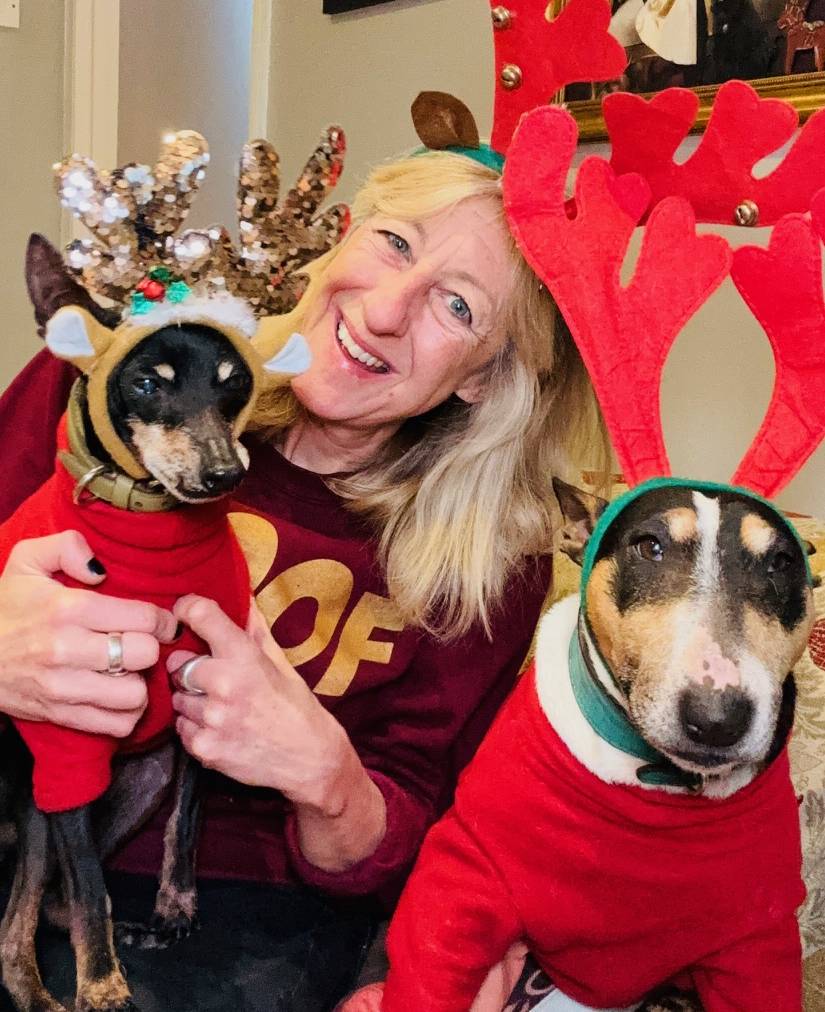
Dogs are family and quite rightly we want to include them in the Christmas festivities. But the truth is dogs don’t know it’s Christmas!
What dogs do know is that something quite stressful is brewing. As we begin to worry about ordering food, the decorations, installing a large tree, moving furniture, shopping, wrapping gifts our stress levels begin to rise and dogs will pick up on this.
Despite this we love to gift our pets and Britain’s biggest pet retailer, Pets at Home, forecasts that despite the cost-of-living crisis over £1 billion will be spent on our four-legged family members this year. *(Retail Times)
Appreciating that dogs experience the festivities differently to us with their heightened senses: supersonic olfaction and hearing. Understanding that a change of routine and delicious smells will bring out a dog’s natural instincts as a scavenger and opportunist.
With a sense of smell estimated over a million times more acute than ours, and hearing four times so, it’s impossible for us to imagine, how dogs internalise the annual cacophony of sounds and smells.
Despite our best efforts, accidents over the holidays can happen. Backed up by one of the UK's largest emergency practices, Vets Now, who anticipate a 79% increase this Christmas and New Year. The company noted that:
Over a third of cases in 2023 were avoidable with 958 incidents of dogs eating chocolate, especially the dark variety, which contains a higher concentration of the chemical compound Theobromine that causes deadly reaction in dogs.
Avoid any chocolate decorations on the tree that could be tempting to an over curious pup, and consider the presents under the tree, which could contain chocolates or other foods. Apart from the chocolates, its the packaging, wrapping paper an sellotape that can also become a veterinary issue.
Another 667 cases were caused by eating mince pies and other foods like Christmas pudding, stollen and cake, which all contain raisins, sultanas and candid peel, which can be lethal in the right quantities, causing kidney failure if not treated in time.
Interestingly, the specific toxic agent in raisons isn't identified, but its thought to be related to Tartaric Acid which impacts negatively on kidney function.
Others emergency situations include eating cooked turkey bones, which splinter causing choking and internal damage.
Keeping dogs away from the kitchen and dining table isn't difficult if you've trained your dog to settle alone away from the madding crowd. Content with appropriate enrichment, the radio and TV on.
Easier said than done as according to the Royal Vet College approximately 70% of Britains dogs suffer from anxiety being left alone.
It's so tempting to offer your dog a Christmas dinner with some leftovers. Apart from a risk of any cooked bones being ingested, depending on what your dog normally eats, it's prudent to opt for your dogs normal dinner to prevent any tummy upsets on Boxing Day.
Moreover, there are some ingredients like onions that contain compounds, like N-propyl disulphide, which in the right quantity can damage and destroy red blood cells, leading to haemolytic aneamia. This is a serious condition where the body can't transport enough oxygen, causing weakness, lethargy, vomiting, pale gums, and potentially organ failure or death.
Ultimately other staples like roast potatoes, are complex carbs, which contain no nutritional value to dogs, and gravy can be quite fatty and laced with red wine.
Alcohol poisoning isn’t uncommon.
With Vets noting cases of dogs knocking over bottles, them smashing and dogs lapping up the liquid, often leading to hospitalisation for days on a drip. Needless to say, let’s hope that Santa Paws brings everyone a happy and an accident free holiday season, without costly vet bills that can add insult to injury at an already expensive time of year.
Top Tips:
- Create boundaries around the Christmas tree, so your dog stays at a safe distance.
- Provide a safe retreat: Ensure your dog has a quiet, comfortable place away from the noise and guests to retreat to if they feel overwhelmed.
- Maintain routine: As much as possible, stick to your dog's usual feeding, exercise, and sleeping schedule to reduce stress.
- Be aware of toxic human foods, and keep them at a safe distance from your dog.
- Know your vet's holiday hours: Check your vet's emergency cover provisions and holiday opening hours in advance. Have the number for the nearest 24-hour emergency clinic handy.
-
Call the vet immediately if concerned: If you suspect your dog has eaten or drunk something they shouldn't, contact your vet straight away. Time is crucial for a better prognosis.
Anna Webb – as a Canine Nutrition and Behaviour expert, Anna combines her psychology degree, with study at the College of Integrated Veterinary Therapies (CIVT) and over 20 years - experience. Host of the award-nominated A DOG’S LIFE podcast, she lives in London, and is owned by Prudence, a Miniature Bull Terrier, Mr Binks, a re-homed English Toy Terrier and Baggy the feral tomcat who moved in. www.annawebb.co.uk